The Bottleneck That Pail Denesters Solve
A pail denester system sits at the very start of a liquid packaging line, separating stacked pails one at a time and delivering them upright into the filling conveyor. It sounds like a simple job. In practice, it is the kind of task that breaks production rhythm when it is done manually: workers pulling sticky nested pails apart, placing them down in the right orientation, keeping pace with a filler that runs at dozens of units per minute. One moment of inattention, one fumbled pail, one misfeed, and the entire downstream line backs up. Pail denester systems remove that vulnerability from the operation entirely.
How a Pail Denester Works
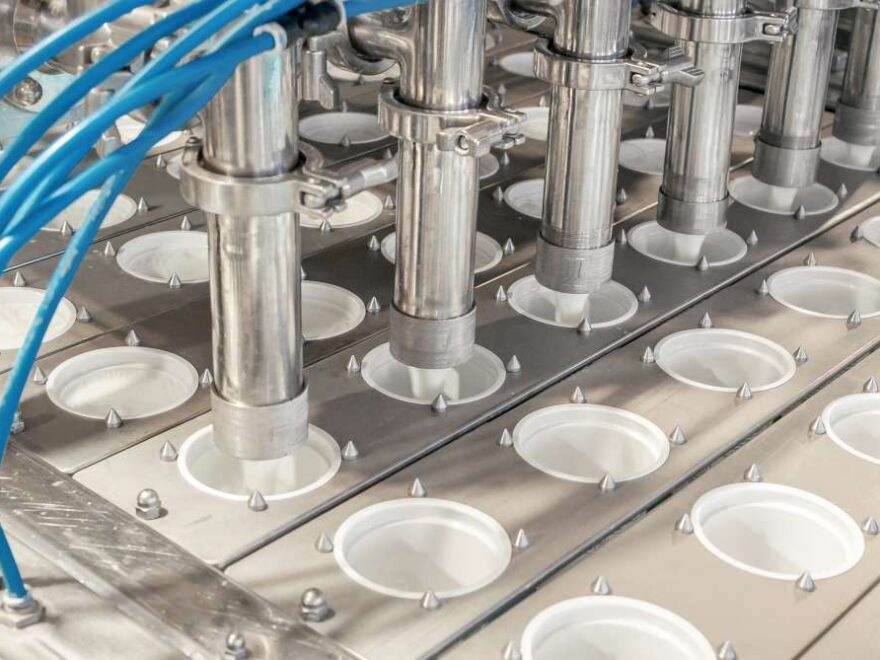
Pail denester machines hold a vertical magazine of nested pails and use a mechanical or pneumatic mechanism to separate the bottom pail from the stack and transfer it onto the conveyor. The separation mechanism must overcome the nesting force, which builds as pails are stacked more tightly under their own weight, without scuffing the pail surface or distorting the rim that the lid will later need to seal against. A well-designed denester manages this consistently across the range of pail sizes and materials it is configured for, delivering each pail correctly orientated, rim facing up, at the interval the filler requires.
Pail denesters operate in two principal configurations:
- Gravity-fed vertical magazines: pails stack in a vertical column and drop one at a time under controlled release
- Horizontal rotary magazines: pails are held in a carousel and indexed forward, suited to higher throughput lines
Why Manual Denesting Creates Production Risk
Packaging line designers sometimes underestimate the physical demand of manual denesting. On a line running 20 pails per minute, that is one pail separation every three seconds, sustained across a full production shift. Automated pail separation systems eliminate this repetitive physical load entirely, removing a common source of both operator injury and production inconsistency. Manual denesting also introduces the possibility of pails entering the line in incorrect orientation or with rim damage from forced separation, both of which cause downstream problems at the filler and capper.
“We build Singapore’s manufacturing competitiveness on automation that makes our workers smarter, not redundant,” Philip Yeo, former Economic Development Board chairman, said in a context that describes precisely the logic behind packaging line automation investment.
Integrating a Pail Denester Into an Automated Line
Pail denester systems are designed to slot into existing conveyor layouts with minimal disruption to the line configuration around them. The denester discharge point aligns with the conveyor elevation and pitch of the downstream filler, and the throughput rate is matched to the filler speed so that the denester neither starves nor floods the line. Control system integration allows the denester to receive stop and start signals from the main line PLC, so that it halts automatically when the filler is blocked and resumes when the fault clears, without requiring operator intervention.
Material compatibility considerations include the pail diameter, height, and nesting angle, as well as the material of the pail body – HDPE pails, metal pails, and composite pails all behave differently under denesting forces, and the mechanism must be set up for the specific material in use.
Throughput Rates and Line Matching
Automated pail feeding machines are rated by throughput in pails per hour, and selecting the right throughput rating requires calculating the peak demand of the filling line rather than its average output. A filler rated at 600 pails per hour running at 85 percent overall equipment effectiveness needs a denester rated for at least 600 pails per hour to prevent starving the line during its peaks. Building in a throughput margin of 10 to 15 percent above the filler’s rated speed is standard practice, as it accommodates production surges and short-run periods of above-average efficiency.
Denesters configured for multiple pail sizes should be evaluated for the changeover time required when switching between sizes, as this downtime affects the effective daily throughput of the line.
Maintenance Considerations for Pail Denesting Equipment
Pail denester systems are mechanically simple relative to other packaging line equipment, but their reliability depends on maintaining the separation mechanism within the dimensional tolerances set during commissioning. As pail designs change or minor dimensional variations appear in incoming pail stock, the denester mechanism may need adjustment to maintain consistent separation without double-feeding or jamming. Preventive maintenance programmes that include periodic checking of separation force, conveyor alignment, and sensor function keep denesters running reliably between scheduled service intervals.
For lines running multiple shifts, remote monitoring capability on the denester’s PLC interface allows maintenance teams to track jam frequency and separation cycle counts, identifying wear before it becomes a production issue.
The Return on Automation Investment
Pail denester systems pay back through three routes: reduced direct labour at the line start, elimination of the production stoppages that manual denesting variability causes, and removal of the injury risk associated with repetitive manual separation work. Pail denester investment delivers measurable return in higher line efficiency and lower per-pail production cost on any line running more than a single shift per day.