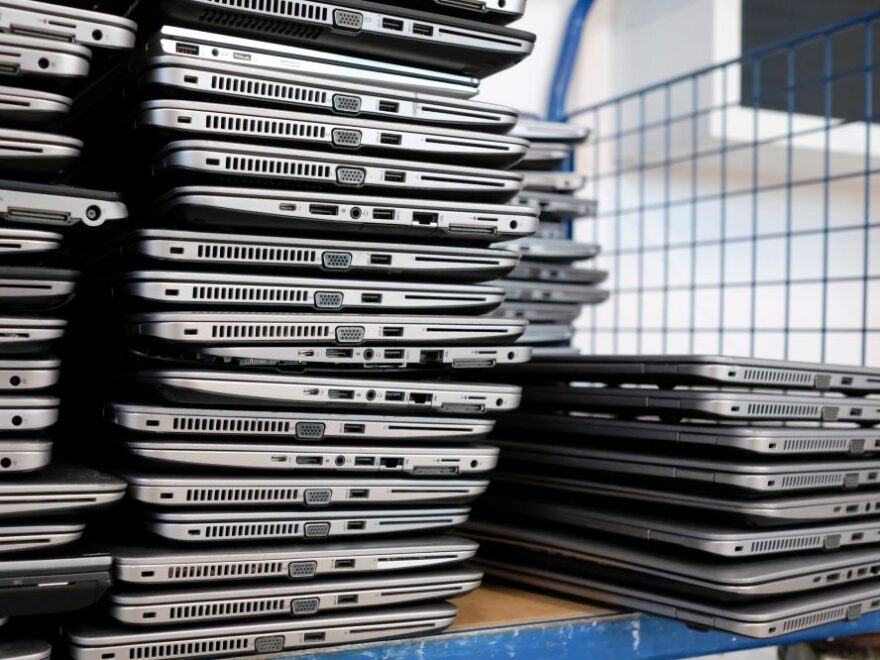
In the quiet corners of Singapore’s homes, millions of laptops rest in digital hibernation—their stories interrupted but not yet concluded—waiting for laptop buyback services to breathe new purpose into their silicon souls.
These machines hold the dreams of entrepreneurs who typed late into humid nights, students who chased academic excellence, and families who gathered around shared displays during distant lockdowns.
The Cartography of Electronic Abandonment
Singapore’s landscape tells a particular story about our relationship with technology. The National Environment Agency reveals that beneath the city-state’s gleaming surface lies a troubling reality: “Singapore generates about 60,000 tonnes of e-waste annually,” a mountain of discarded electronics that grows with each technological advancement and each upgrade cycle that pulls consumers toward newer, faster machines.
Within this electronic avalanche, laptops occupy a unique position—accumulating in wardrobes and storage rooms like digital sediment layers marking technological time.
Each laptop contains precious metals from distant mountains, rare earth elements bearing environmental scars, and lithium batteries carrying both power and consequence. When unused, their embedded carbon footprint compounds, representing resources consumed but value unrealised.
The Ecology of Laptop Recovery Programs
Singapore’s approach to computer buyback and recovery reflects the island nation’s characteristic pragmatism applied to environmental stewardship. The Extended Producer Responsibility framework establishes that “producers… are responsible for the collection and treatment of their products when they reach end-of-life,” creating systematic pathways for laptop trade-in programs that serve both economic and ecological objectives.
Professional laptop buyback services have emerged to bridge the gap between individual need and collective responsibility. These programs recognise that effective laptop disposal requires addressing the complex intersection of data security, environmental protection, and economic recovery:
-
Data sanctuary protocols ensuring complete information erasure before laptop resale
-
Condition assessment processes determining whether devices suit refurbishment or component recovery
-
Market valuation systems reflecting current demand for second-hand computing equipment
-
Environmental compliance measures meeting Singapore’s regulatory requirements for electronic waste management
-
Secure transportation networks protecting devices throughout the recovery journey
The National Environment Agency acknowledges that “currently, only laptop and mobile phone battery recycling services are available,” highlighting both the specialised nature of computer equipment recovery and the growing recognition of these devices’ particular environmental significance.

Stories Written in Silicon and Circuit Boards
Each laptop entering Singapore’s buyback ecosystem carries intimate traces of its previous life. The marketing executive’s machine, worn smooth from endless video conferences, contains residual heat of deadlines met. The student’s laptop, decorated with campus stickers, holds ghostly imprints of research papers and late-night conversations.
These personal narratives connect to global environmental stories extending beyond Singapore’s borders. Laptop recovery programmes become acts of global stewardship, extending the useful life of materials carrying significant ecological debt.
The Poetry of Technological Regeneration
There exists something deeply hopeful in the moment when a discarded laptop finds new purpose through professional buyback services. The machine that once served a graphic designer’s creative vision might eventually support a small business owner’s entrepreneurial dreams, or help a family stay connected across geographical distances that would otherwise prove isolating.
This technological migration creates ripple effects that extend throughout Singapore’s digital ecosystem. Refurbished laptops provide affordable computing access for communities that might otherwise face digital exclusion, whilst component recovery supports local repair industries that extend the lifespan of other electronic devices.
Professional laptop buyback operations employ sophisticated logistics that mirror natural ecological processes—sorting, categorising, and channelling materials toward their most appropriate next chapter:
-
Functional devices moving toward second-hand markets that serve price-conscious consumers
-
Repairable machines entering refurbishment streams that restore performance whilst preserving embedded environmental value
-
Component-grade units providing spare parts that support repair networks across Singapore
-
Material-recovery candidates supplying precious metals and rare earth elements for manufacturing applications
The Choreography of Responsible Disposal
Singapore’s compact geography creates unique opportunities for comprehensive laptop collection systems serving environmental objectives whilst supporting local economic activity. Efficient transportation networks enable convenient pickup services for the entire population without excessive carbon overhead, whilst centralised processing facilities achieve economies of scale for advanced recovery techniques.
The integration of professional data destruction services with environmental recovery represents a particularly Singapore innovation—addressing the privacy concerns that often prevent people from parting with old computing equipment whilst ensuring that valuable materials and functional devices continue their useful life cycles.
Toward Digital Regeneration
The transformation of unwanted laptops from environmental burden to economic opportunity reflects broader questions about how societies can create circular systems that honour both human needs and environmental limits. Singapore’s laptop recovery ecosystem demonstrates that technological progress need not require endless consumption of virgin materials, but can instead embrace regenerative approaches that extend the useful life of existing resources.
The stories written by laptop buyback programmes extend beyond individual transactions to encompass community resilience, environmental stewardship, and economic innovation. Each recovered machine represents resources conserved, emissions avoided, and digital equity enhanced through the patient work of technological regeneration.
In the end, these programs offer something rare in our age of planned obsolescence—the possibility that our electronic companions might enjoy multiple lives, serving different dreams and supporting various human endeavours before finally surrendering their materials to the careful alchemy of professional laptop buyback services.